
The Silicone Hose: An Essential Tool for Eco Printing Wider Fabrics

Eco printing is a relatively contemporary textile technique, which means there are no established traditional tools or fixed rules about how it should be done. Although the foundations of fabric preparation and color extraction are based in ancestral natural dye principles, the way to make your composition leaves plenty of room for experimentation, improvisation and creativity. In many ways, that's one of the things I love most about this craft: it encourages us to be resourceful, make use of what we already have and find creative solutions along the way.
However, this freedom also means that we sometimes turn to materials that aren't necessarily suitable for the process. One of the most common examples I've come across is the use of hoses for rolling eco printing bundles.
Why use a hose for eco printing?

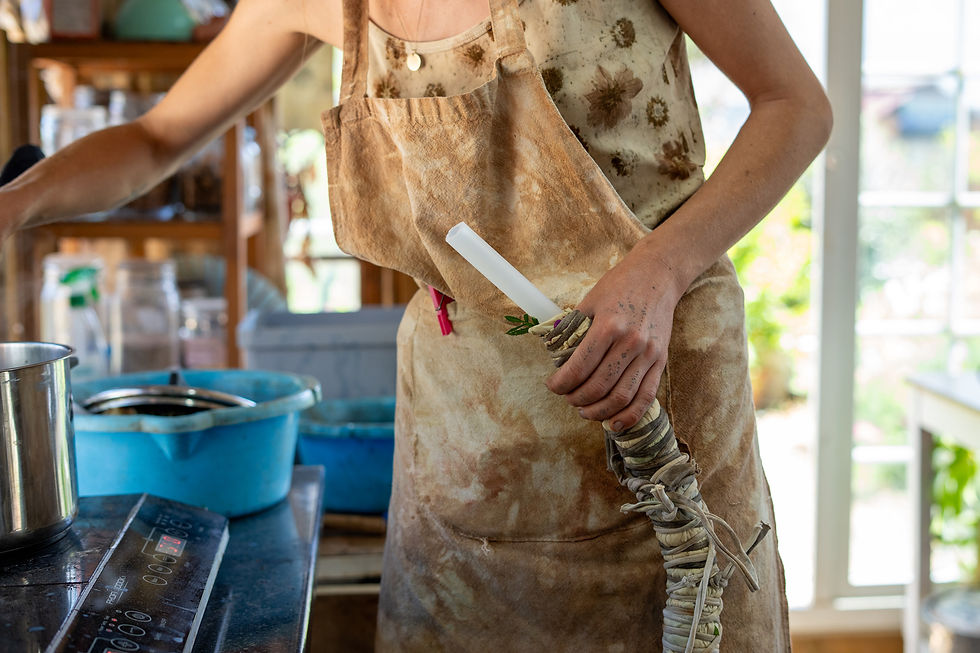
Eco printing generally involves arranging leaves and flowers onto fabric, rolling the fabric tightly around a central object, and securing it with string before steaming or simmering the bundle. This central object can be a wooden dowel, a metal pipe or a hose.
Hoses have become a popular choice, particularly when working with larger pieces of fabric. Because unlike a rigid wooden dowel, a flexible hose allows you to roll longer widths of fabric and, once tied, coil the bundle into a shape that fits inside a smaller cooking pot. This makes it possible to work with wider textiles without needing an oversized pot.
The problem is that many people use ordinary PVC garden or irrigation hoses for this purpose. These hoses are designed for watering plants, not for repeated exposure to the high temperatures involved in eco printing.

When heated beyond their intended temperature range, PVC hoses can degrade, become brittle and release unwanted substances like microplastic particles. Over time, repeated heating can also cause them to lose their flexibility and structural integrity.
For a technique that takes inspiration from nature and is used as an ecological approach to textile printing, using materials that aren't designed for these conditions doesn't feel like the best solution.
A sustainable alternative: Food-grade silicone

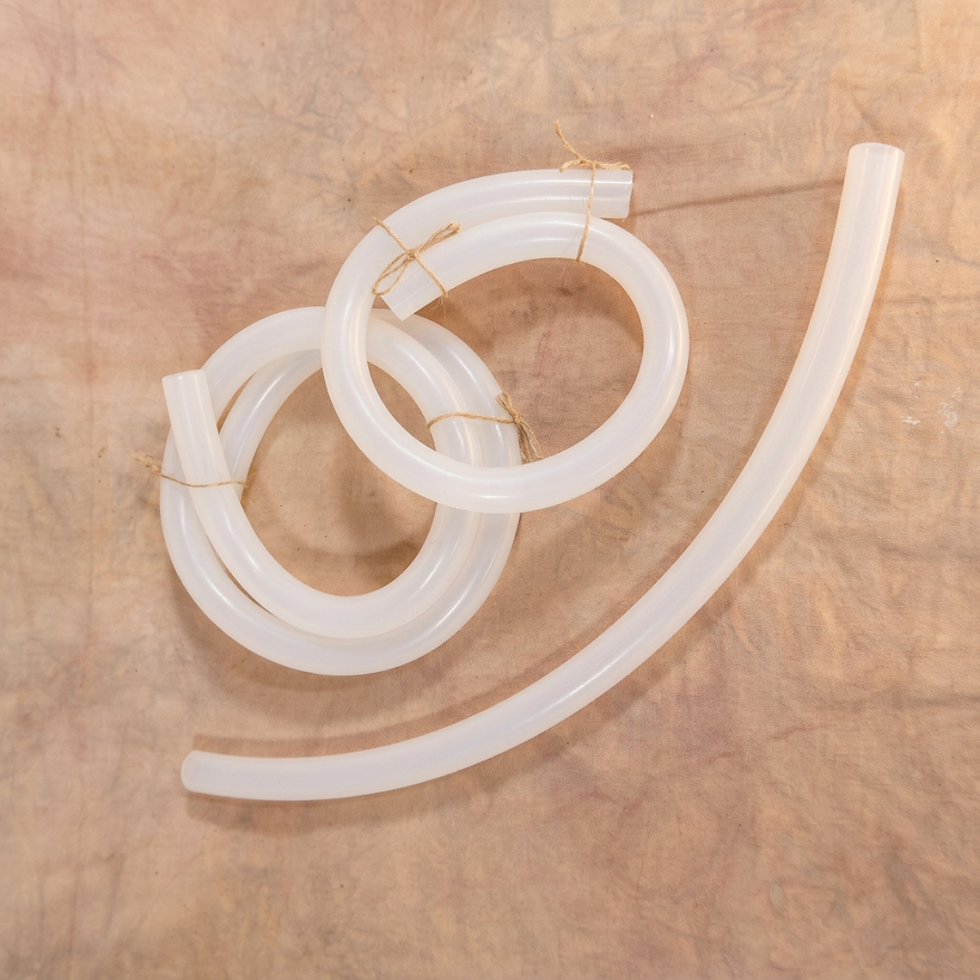
After years of experimenting with different materials and testing various solutions, I finally found a special food-grade silicone hose that meets the requirements of eco printing much better.
Unlike conventional garden hoses, this silicone pipe is designed to withstand temperatures of up to 300°C. It remains flexible during use and returns to its original shape once cooled, making it suitable for repeated use. It's a very similar material to the reusable silicone baking sheets that are made to go in the oven, only in a different format.

Another feature that is particularly important is its hollow interior. When rolling your fabric, you can insert a rigid pole or rod through the hose to keep it straight and provide the support needed to create a tight bundle. Once the fabric is rolled and secured with string, simply remove the rod and coil the flexible hose into a smaller shape that fits inside your cooking pot.
It's a simple solution, but one that makes working with wider fabrics much easier without compromising on the design by having to fold the fabric to size or using materials unsuitable for boiling temperatures.

Choosing the right length
We offer our silicone hose in increments of 50 cm, so you can choose a length that suits your projects.
As a general reference, most fabrics have a maximum width of approximately 1.5 to 2 metres. However, the length of hose you need will depend on the size of your fabric and how you prefer to roll your bundles.
In the Extended Eco Printing Kit , we include 60cm of the silicone pipe which is long enough to bundle the largest blanks without having to fold the fabric allowing you to create a composition on the full fabric instead of having it mirrored.
A small tool that makes a difference
Eco printing is inherently a dynamic practice. There is no single right way to approach it, and discovering creative solutions for your intended design is part of the fun. But being resourceful also means thinking carefully about the materials we choose. You must think about how they behave during the process and whether they match the philosophy of the work.
Sometimes, finding the right tool can take years of sourcing and testing. This silicone hose is one of those small improvements that makes eco printing more versatile and better suited to the temperatures involved in the process. You can still work on the full width of fabric without compromising on the ecological principles.


Comments