
Sustainable Foraging Principles

Just because something is natural doesn't make it sustainable. Natural dyeing often carries with it the assumption that because we are dyeing with plants, the action is inherently earth-friendly. But like any activity, it is how we engage with it that will determine whether it's sustainable or not. In its contemporary context, natural dyeing has been about slowing down and reconnecting with the landscape through craft. This is why sustainable foraging should be at the very center of every dyers' activity (whether hobby or professional).
Why forage sustainably?
Obviously because it is the responsible thing to do and preserves the landscape. But beyond that, it's the best way to ensure that you can revisit the same plants and ecosystems year after year - becoming allies for your dye practice. If you don't take care of the plants, quickly you will run out of plant material to dye with. Responsible foraging is really just the sensible, pragmatic option.
Carefully harvesting plant material for the dye studio. Freshly gathered botanicals ready for natural dyeing. Observing plants in their habitat before harvesting. Learning to identify plants is the first step in responsible foraging. Knowing what grows around us helps shape a more sustainable dye practice.
#1 Before You Pick Anything: Know What You're Looking At
This is my single most important principle, and it comes before all the others.
The first time you explore a new area, don't plan to collect anything. Leave your bags at home. Go simply to observe - walk slowly, take photographs, make notes. Then go home and identify every species you encountered, properly, using their Latin names. Latin names are valuable because common names shift by region and language leading to misidentification. Resources like Flora-On (for those of us in Portugal) are invaluable for this.
Knowing a plant by name unlocks everything else you need to know: whether it's endangered or abundant, native or invasive, in season or dormant, maybe it's not safe to touch or has a dangerous lookalike. That knowledge is the foundation of every responsible foraging decision that follows and will also help you in the studio!
More sustainable foraging principles (after you've identified):

2. Don't pick the first of what you see. That solitary plant may be the only one in the area. Keep walking. If a species is truly abundant, you'll quickly realize.
3. Be careful when transporting invasive plants. Invasive species are great at surviving, sometimes spreading aggressively, and can accidentally be introduced to somewhere new during transportation. Know which plants are invasive in your region and handle them accordingly. Be particularly aware of accidentally dropping seeds and parts of roots along the way.
4. After a storm, go out and gather what has already fallen. Take advantage of broken branches and dropped leaves the storm has harvested for you. This is material that would otherwise decompose or thrown out, offered freely.
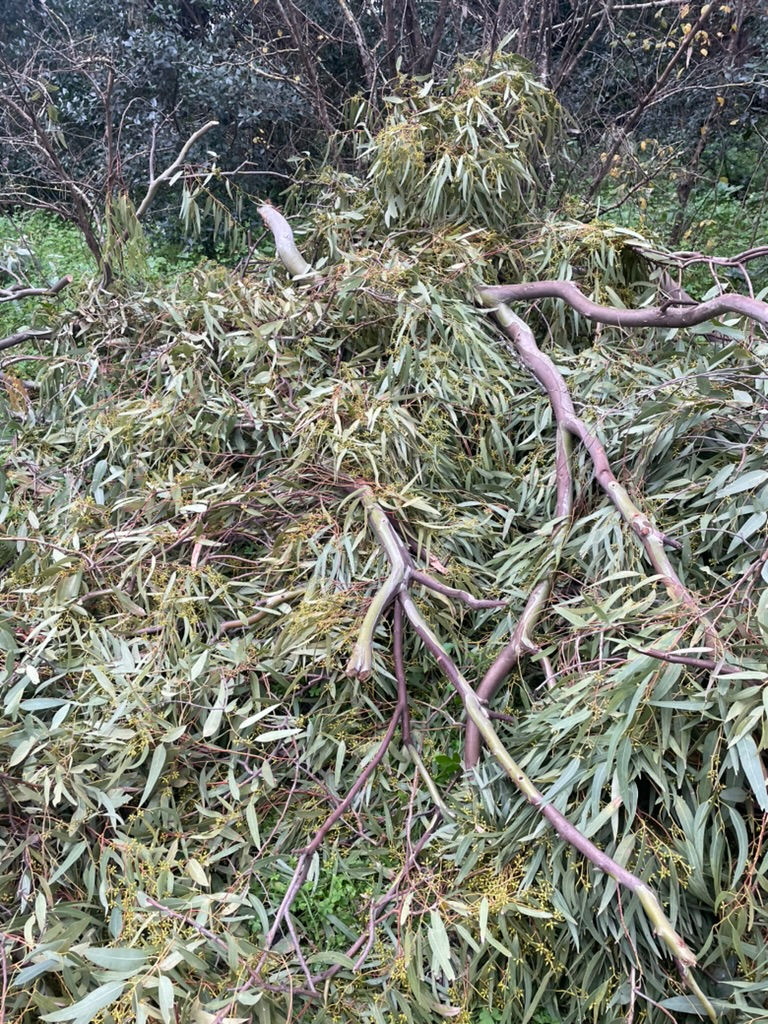
5. Avoid harvesting on wet, overcast, or humid days. Any cut or break in a plant's tissue is a wound, and wounds need to close. In damp conditions, that process slows and the risk of fungal infection or disease for the plant increases significantly.
6. Only take what you need, and leave the rest. This one seems simple, but it can be difficult to contain the excitement. I know it can be super tempting (and this is probably the principle I’m worst at), but take what your project requires, nothing more.
7. Wildflowers don't grow for you - they grow for pollinators. If you're harvesting flowers, the rule of thumb I follow is one in every twenty to thirty. The flowers that remain feed bees, butterflies, and moths whose work is much more important than mine.

8. Harvest with precision. Be careful and intentional when collecting material directly from a plant. Pull back individual leaves or flowers carefully, or cut stems and branches at an intersection. Never strip a plant bare. Never tear at it carelessly. Clean your pruning scissors regularly with rubbing alcohol, especially after cutting a sick or diseased plant.

9. Keep an eye out for your neighbours' prunings. Garden clippings, hedge trimmings, pruned rose canes — these are often left in piles at the roadside or set out with garden waste. Ask, and you'll usually find people are delighted for someone to take them. Onion skins from the greengrocer. Avocado skins from the café. The dye materials around us are more abundant than we realise, once we start looking.
10. Say thank you. I know how this sounds. Say it anyway. There is something in the act of pausing before a harvest — of acknowledging the gift being given, of recognising that this plant did not grow for your benefit — that quietly shapes the way you move through a landscape. Gratitude is good ecology.
By foraging in this way, you can ensure that you can revisit plants year after year for their dye material. And if done strategically, it can be a powerful tool to strengthen and regenerate the landscape. Eco printing is only eco if we practice it with respect.
A foraging companion and a basket of responsibly gathered plant material. Different plant materials offer their own colours, textures and possibilities in the dye studio. Freshly gathered eucalyptus leaves, harvested carefully and only in the quantity needed.


Comments